
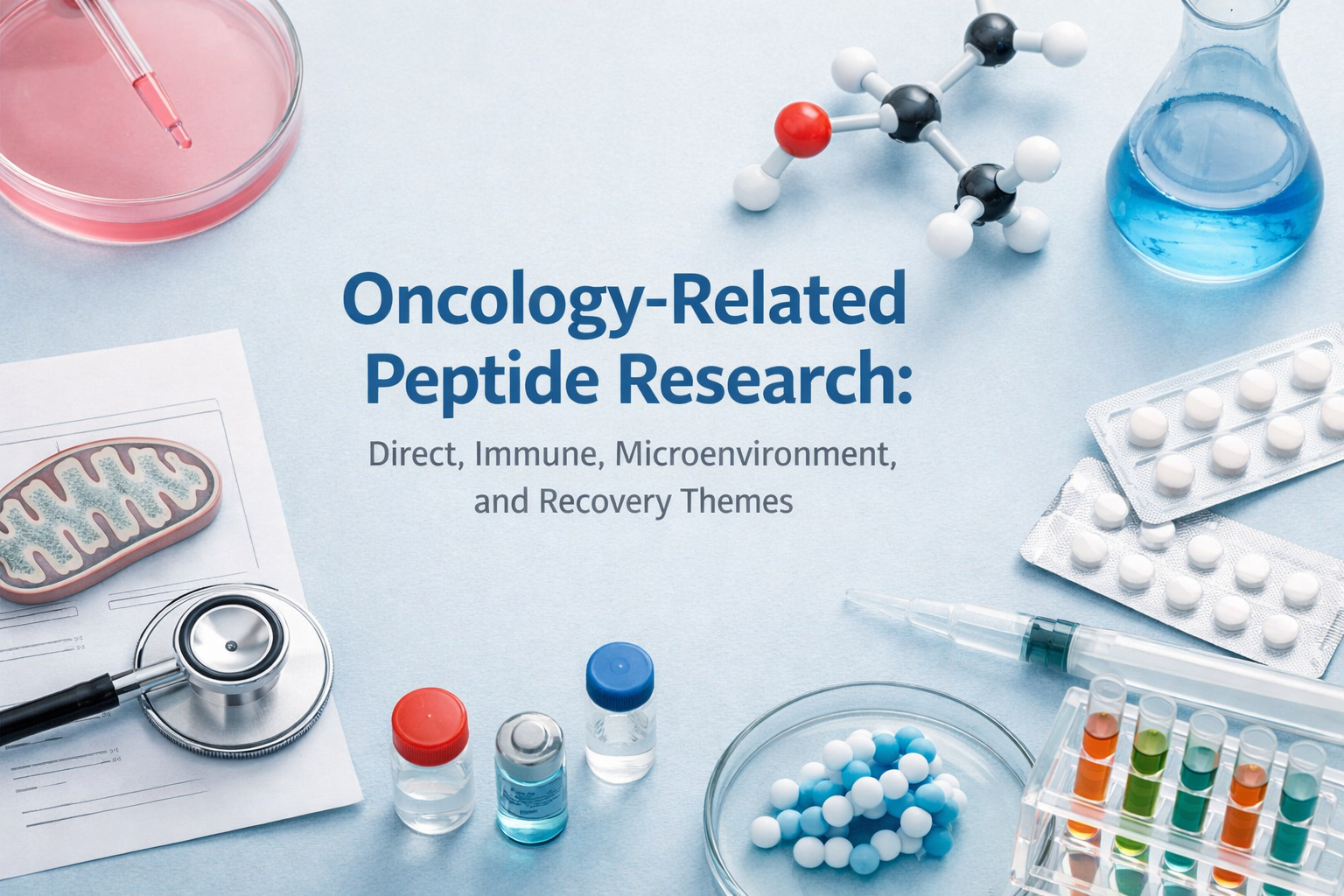
Peptides and Cancer Research
Not all peptides in research catalogs are relevant to oncology. While a small subset—such as FOXO4-DRI and PNC-27—align with direct anticancer mechanisms, most function in immune modulation, metabolic signaling, or tissue repair. This article breaks down the peptides that actually matter in cancer-related research, separating true cytotoxic concepts from supportive and often misunderstood compounds.
The “Not Yet” Five: Promising Compounds That Still Need Evidence.
Not every promising peptide is ready for real-world use.
In this article we examine five compounds that generate interest in research circles but still lack the evidence needed for confident recommendations. From emerging molecules to highly speculative candidates, these peptides remain firmly in the “not yet” category until stronger scientific validation appears.
Cerebrolysin: Hero or Hype?
Cerebrolysin is a neurotrophic peptide therapy studied internationally for Alzheimer’s disease and other neurological disorders. While it is not considered a cure for dementia, global research suggests it may offer modest improvements in cognition and overall clinical function in some patients. This article explores what the international evidence actually shows—and where the most meaningful therapeutic signals appear to be.

The Copper Code: How GHK-Cu Rebuilds Skin From the Surface Down
GHK-Cu is a copper-binding peptide naturally involved in skin repair and structural support. In topical creams, it helps guide collagen pathways, strengthen the skin barrier, and support calmer, healthier-looking skin over time—without aggressive irritation.
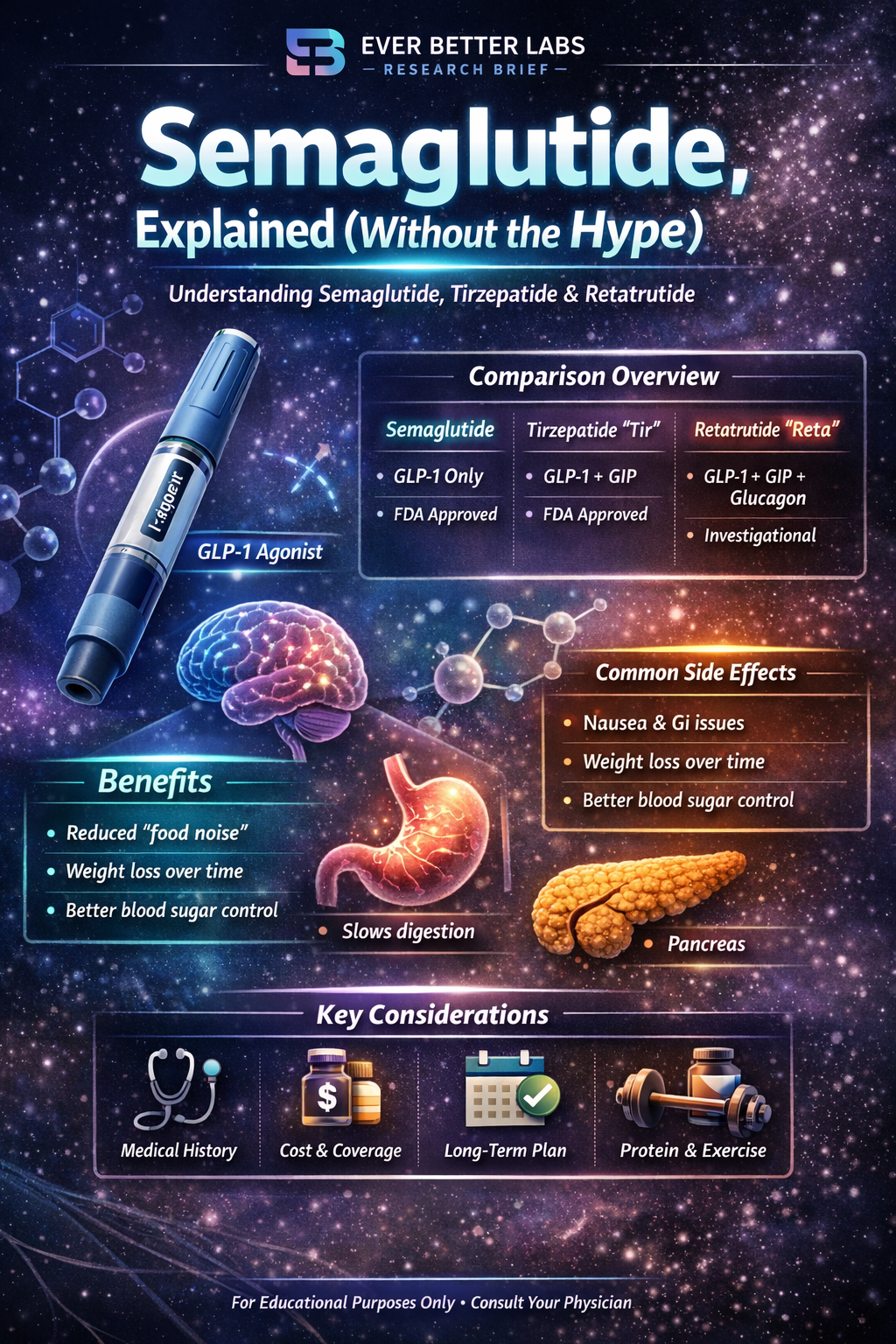
Semaglutide, Tirzepatide and Retatrutide. Whats the difference?
Semaglutide has become one of the most talked-about medications in modern health — praised by some as life-changing, criticized by others as a shortcut, and misunderstood by many.
This article breaks down what semaglutide actually is, how it works, what it can (and can’t) do, and how it compares to newer medications like tirzepatide (“tir”) and retatrutide (“reta”). No hype. Just clear education.
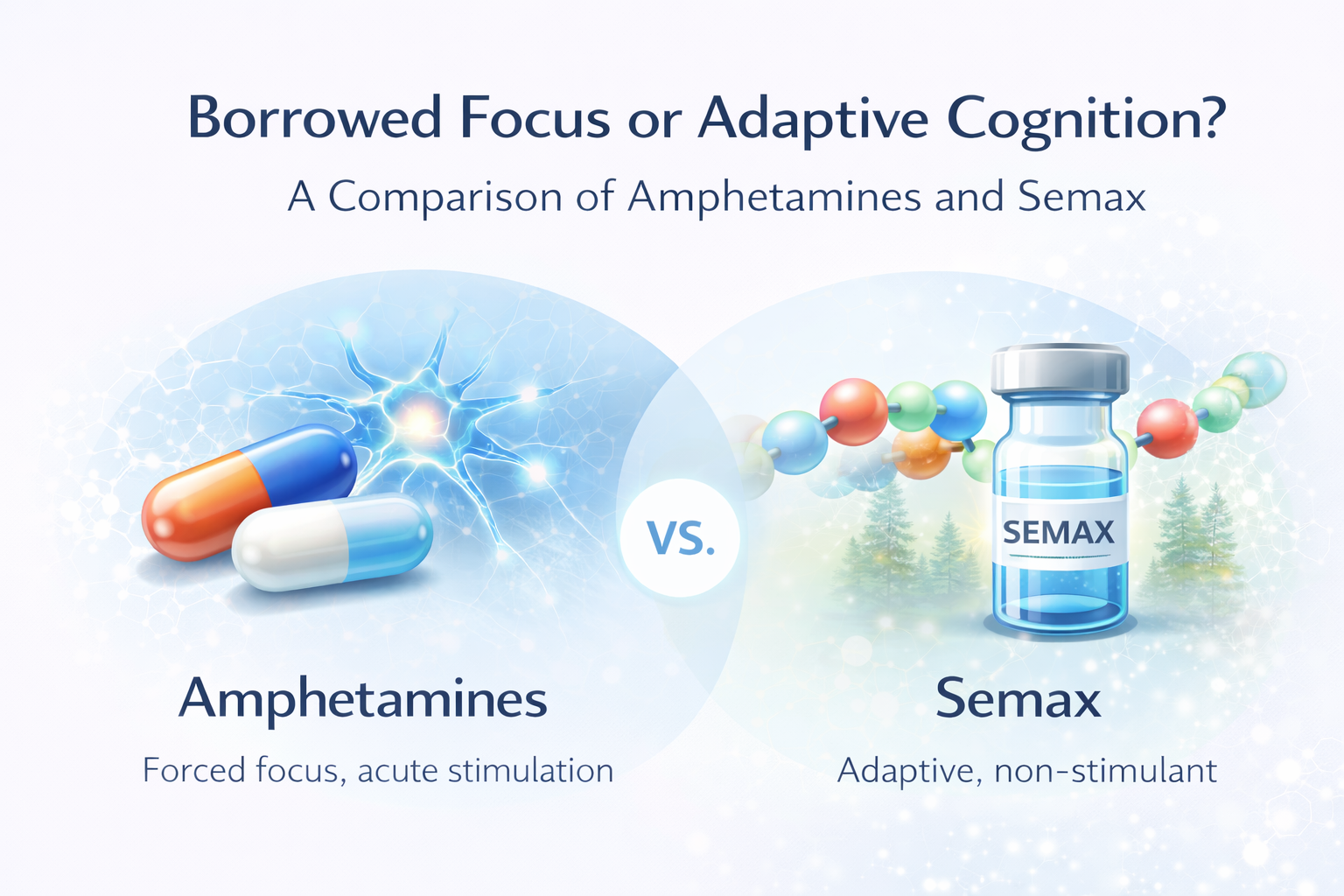
Focus at a Cost: Stimulant Amphetamines vs. Semax
Stimulant amphetamines can produce powerful, immediate focus—but often at the cost of sleep, emotional stability, and long-term nervous system health. This research-driven comparison explores how Semax represents a fundamentally different, non-stimulant approach to cognition centered on adaptation rather than amplification.

Beyond Sedation: Selank’s Role in Stress and Emotional Balance
Selank is a synthetic peptide studied internationally for its role in stress response, emotional regulation, and cognitive balance. This research brief explores how Selank is discussed outside the U.S. and why its global research history matters.
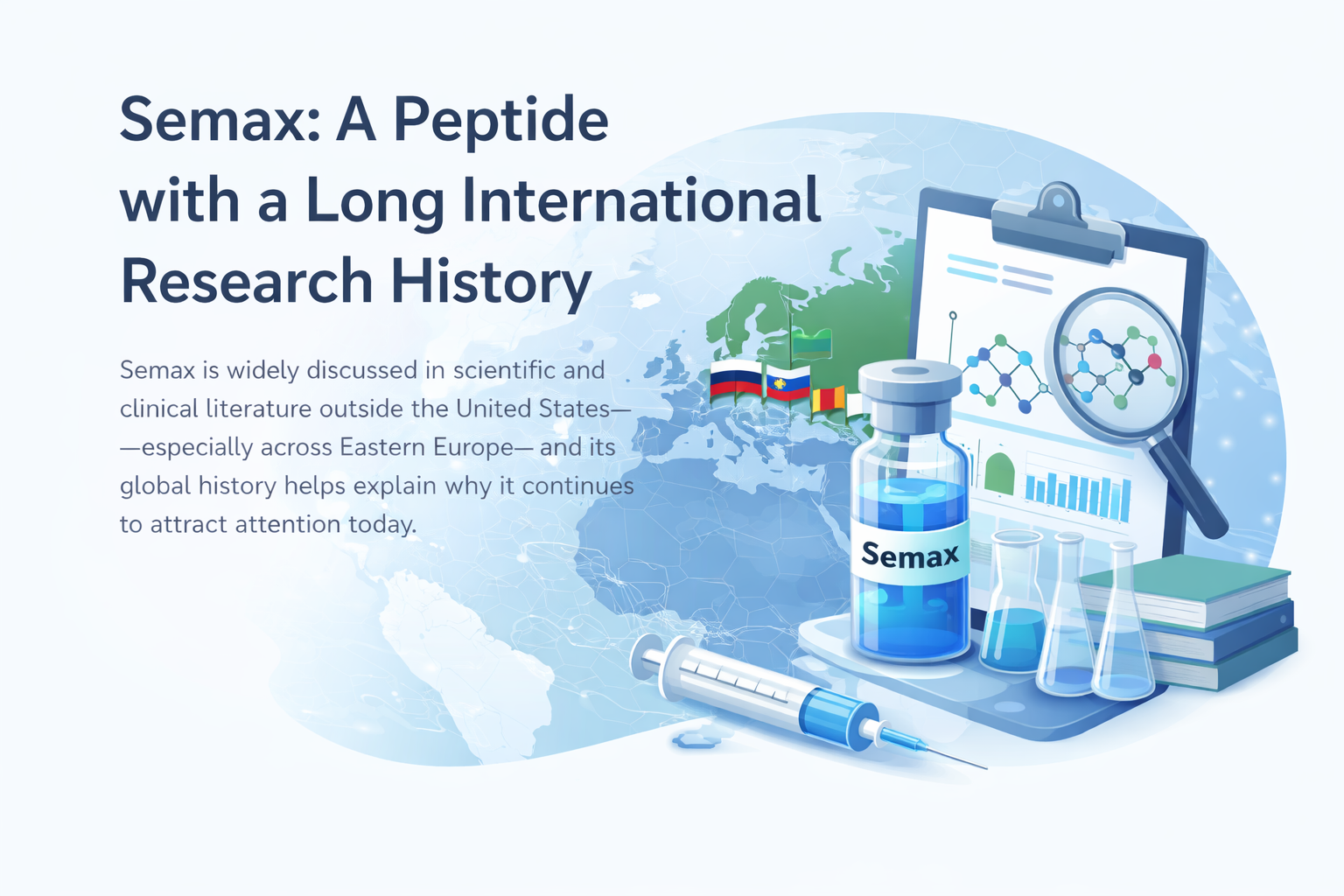
Semax: Engineering Cognitive Adaptation
Semax is a neuropeptide with a long international research history, often discussed in relation to neuroplasticity, learning, and adaptive brain signaling. While less familiar in U.S. conversations, its global use highlights a non-stimulant approach to cognitive support that prioritizes regulation over force.
The Science Behind Cerebrolysin and Brain Healing Research
Cerebrolysin is a neuropeptide preparation studied in brain recovery and neuroplasticity research. This educational overview examines what it is, how it’s used in research and clinical settings abroad, and what the scientific evidence actually shows.
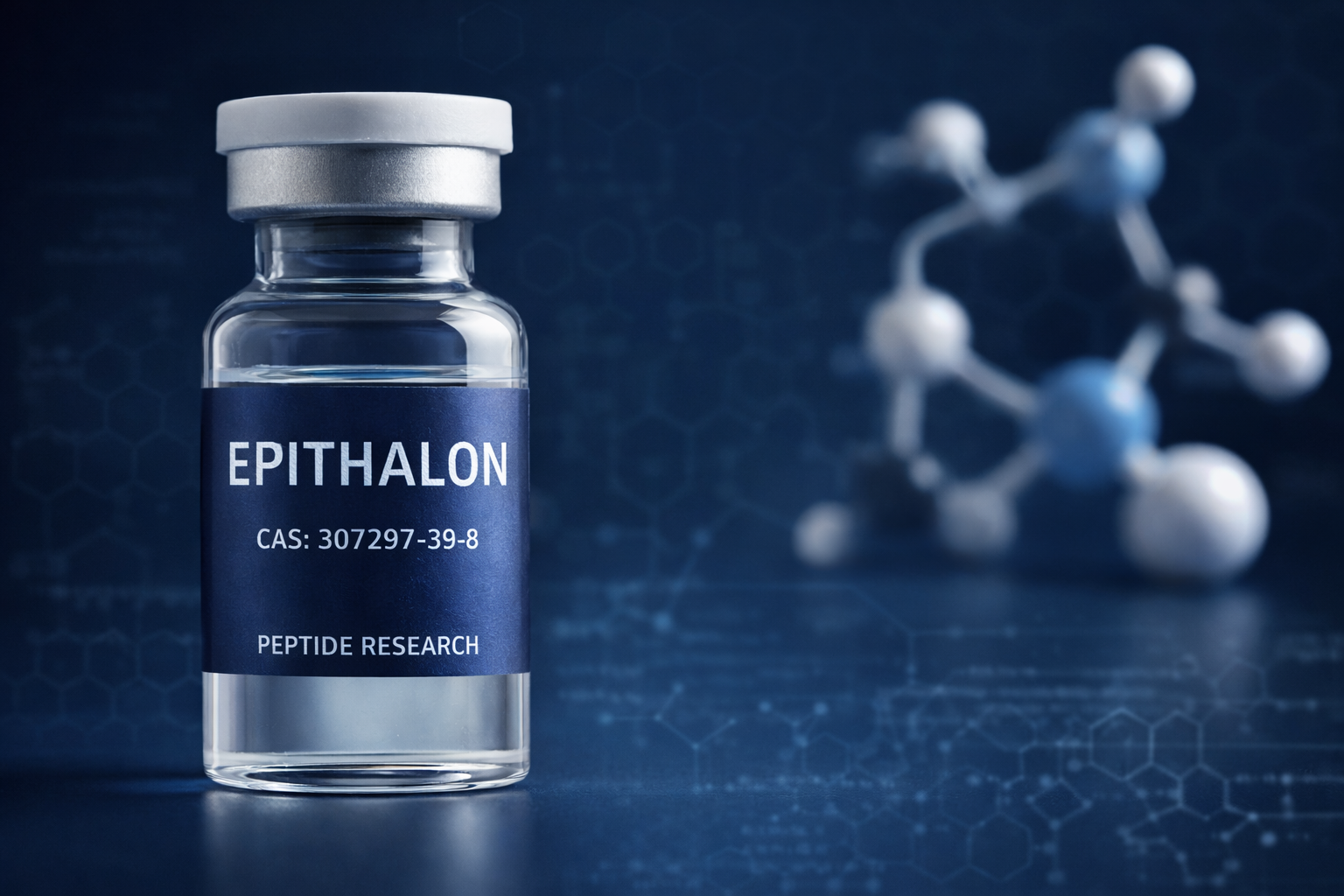
Epithalon and the Biology of Time: What Research Suggests
Epithalon is a short peptide studied in longevity research for its potential connections to cellular aging, circadian biology, and telomere science. This article explores what it is, why it’s studied, and where the evidence currently stands.